Serpentime

Routine as a living timeline

Product direction, UX/UI and iOS implementation, end to end.

Solo creatoriOSLive on the App Store

Context

Time as a path, not a list

Many calendar and habit apps assume linear lists and heavy setup. For people who benefit from clear visual structure, immediate feedback, and low cognitive load (including many ADHD users), that can feel draining. Serpentime tests a different metaphor: time as a path you shape with gestures, with events as nodes, plus haptics, sound, and onboarding so the UI teaches itself.
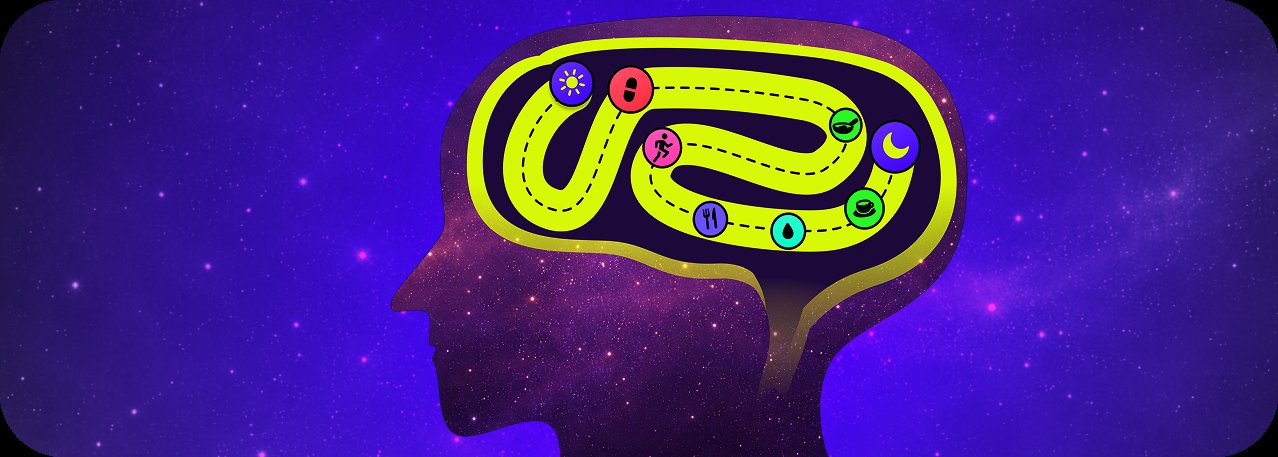
A head with the Serpentime path inside
Low mental effort is the goal: the day lives in one shape, not in a list.

What I'm building

A gesture-first routine canvas

  • Organic timeline canvas: Multiple visual modes and skins so the same schedule can feel calm or expressive.
  • Gesture-first editing: Drag, pinch, long-press, and guided coaching so first runs aren't guesswork.
  • Routine primitives: Categorized events, recurrence, per-day state, and flows for empty state.
  • Persistence & continuity: Core Data (local-first); day rollover handling; Lock Screen widget.
  • Sensory layer: Haptics and preloaded audio so actions feel responsive.
  • Design system: Shared tokens for type, spacing, color, radius; unified sheet pattern.

The UI

How the path works

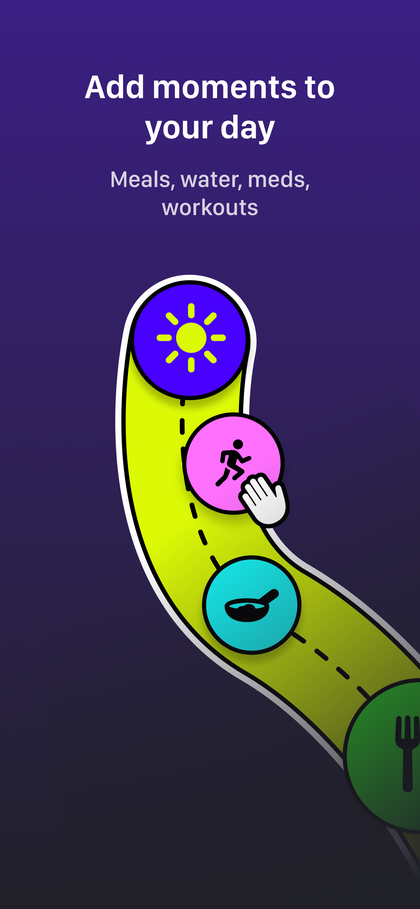
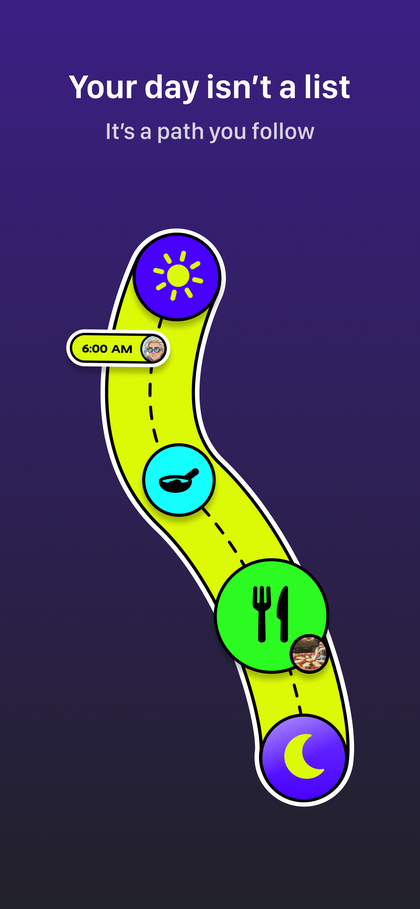
I designed every screen and built it myself in SwiftUI. The onboarding teaches the gestures while you set up your first day. The path is drawn in layers, and each skin is documented down to every node, so a new look is a set of tokens, not a redesign.

The real onboarding on iPhone: wake and sleep times, coach marks, the first events and a drag to reshape the path.
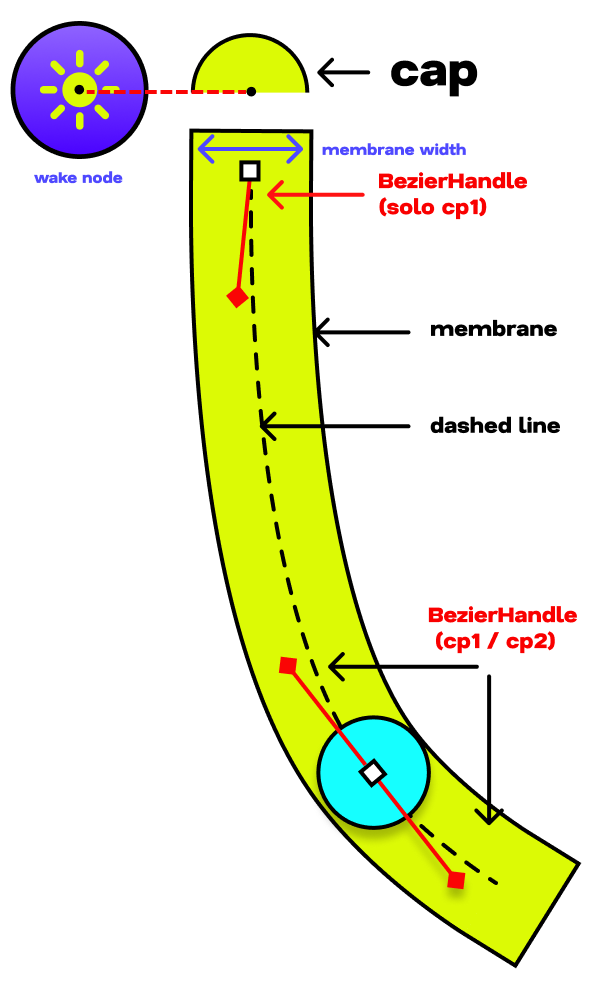
Diagram of the path: wake node, cap, membrane, dashed line and Bezier handles
Anatomy of the path: the membrane, the dashed line, the caps and the Bezier handles that bend it around each node.
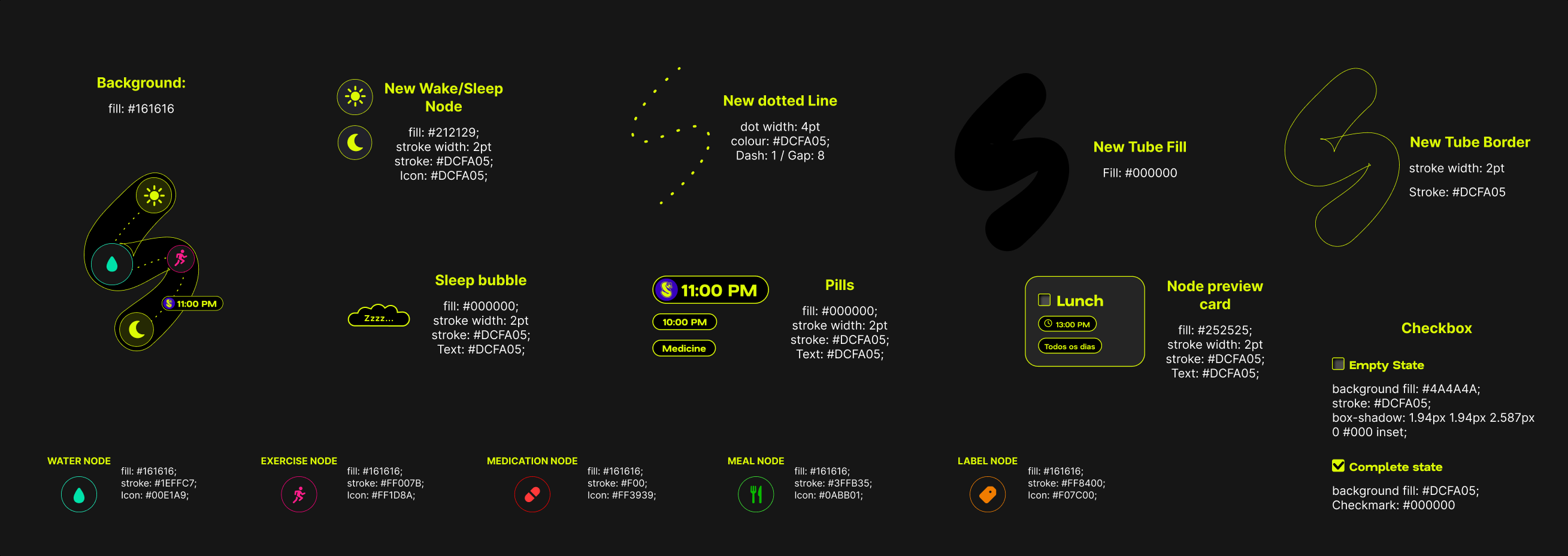
Dark skin spec sheet with colours and stroke widths for every part of the path and its nodes
A new dark skin, documented: fill, stroke and icon colour for every part of the path and its nodes.

Status & learnings

Delight is not the same as value

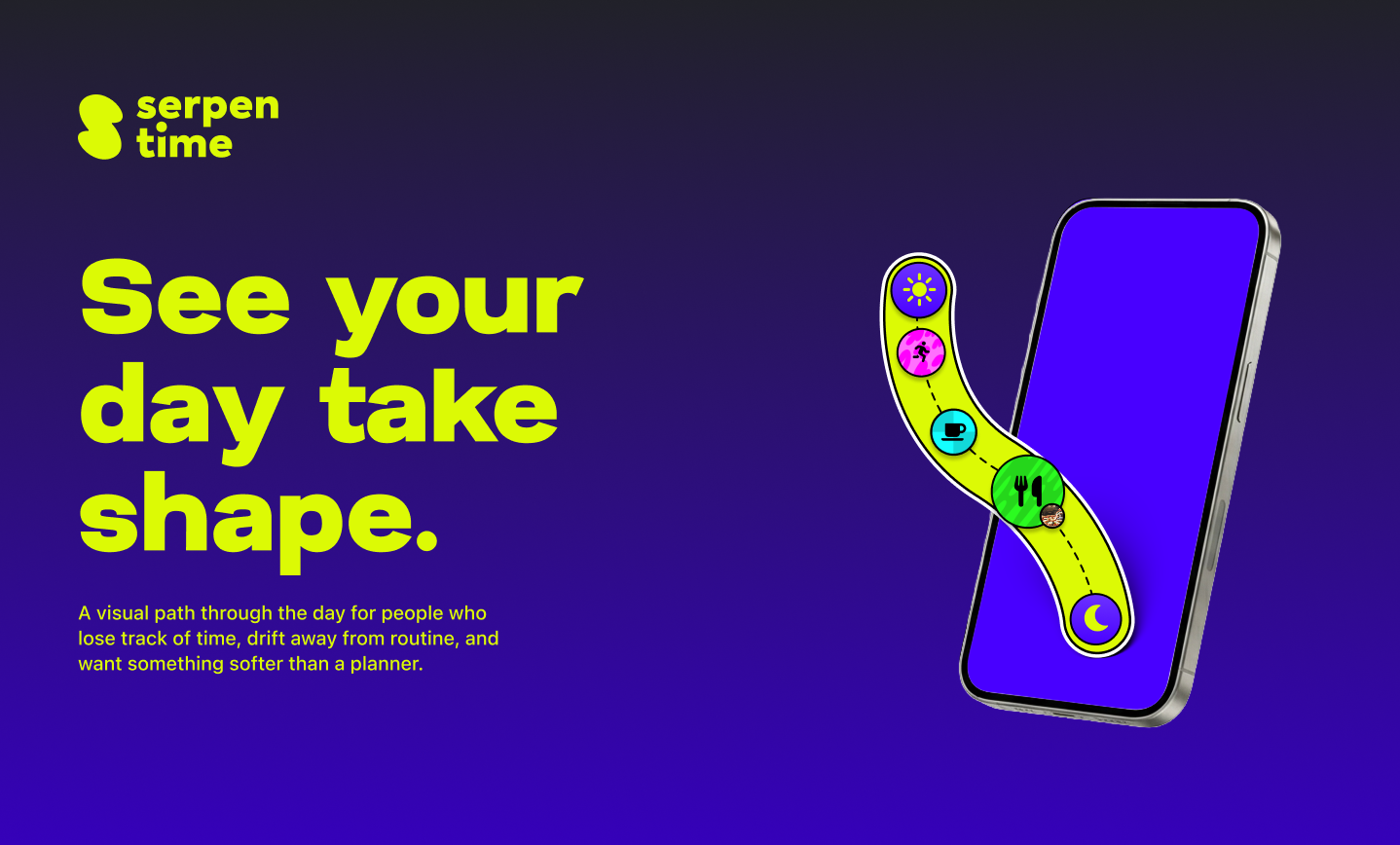
The product. Serpentime is an iOS day planner where your routine is a path, not a list. Events are nodes on the path. You edit them with gestures, and every action has haptics and sound. It is built for people who need clear visual structure and low mental effort, including many ADHD users.

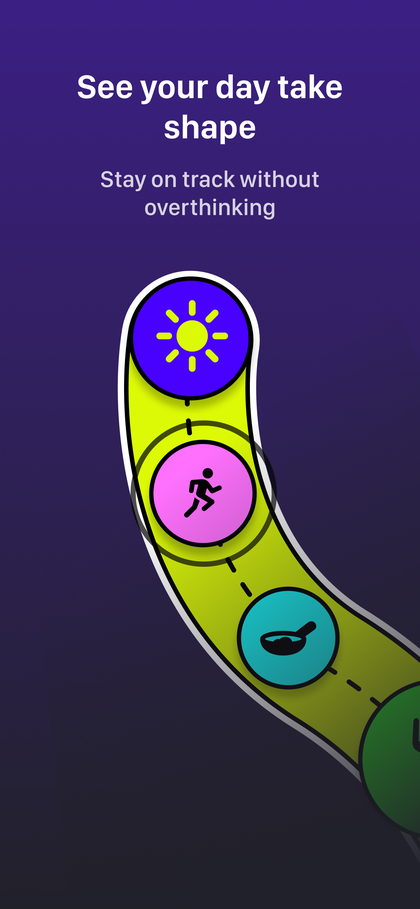
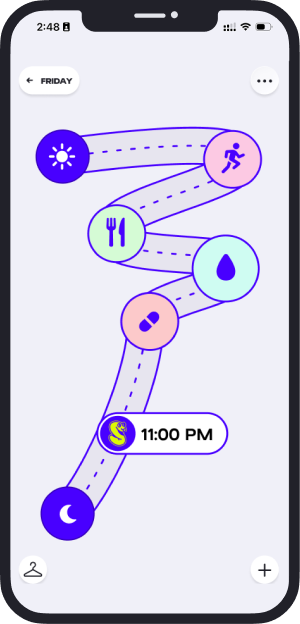
Serpentime app screen with a day path
The real app: one day, one path, events as nodes.

How I tested it. After launching quietly on the App Store, I sent the beta one by one to about 13 friends, before any public promotion. I wrote each email in a casual way, like a quick phone message. A polished, branded email feels like a campaign, and people give less honest feedback to a campaign. Feedback came back in personal chats, in the testers' own words.

What I heard. The reaction to the experience was strong. Testers loved the art, the haptics and the sound. One said "it's like a video game." Another compared it to Endel. But the same people said something else: "not sure how it's useful, but I love playing around with it." Another asked what the goal was. A third expected the path to grow as the day goes on. The wow was landing. The why was not.

The part testers loved: the path, the motion, the feel.

What I found in the code. I went back to the code to understand why. The user's effort fed nothing. Confirming an event did not change the canvas. The things that grew in the app grew with time, not with action. The loop was upside down.

Before, effort fed nothing. Now, every confirmed event feeds the snake.

What I'm changing. I'm redesigning the core loop. The snake starts each day asleep. Your first confirmed event wakes it up. Each event you confirm, the snake swallows, and it sits inside its body at that time of day. By night, the body is the record of your day. Full days make a robust snake. Light days make a thin one. No points, no streaks, no guilt. Unconfirmed events just disappear at midnight.

The lesson. People enjoying a product is not proof they need it. Real value comes when the user's action changes something they care about.